I. Introduction
I spent more than twenty years with the NYPD, most of it in Special Operations. I breathed the air at Ground Zero. I stood on skirmish lines watching CS drift back into our own guys, and I walked into Bronx apartments where the smell hit you before the door was fully open. Here is the one lesson all of that taught me about respiratory protection: your lungs do not give second chances.
The exposure list for a working cop in 2026 is longer than it has ever been. Riot control agents at crowd events. Fentanyl in powder form on a warrant. Clandestine labs. A tanker leaked two blocks into your sector. The mask on your kit, or the mask locked in a supply room across town, is the difference between working the problem and becoming part of it.
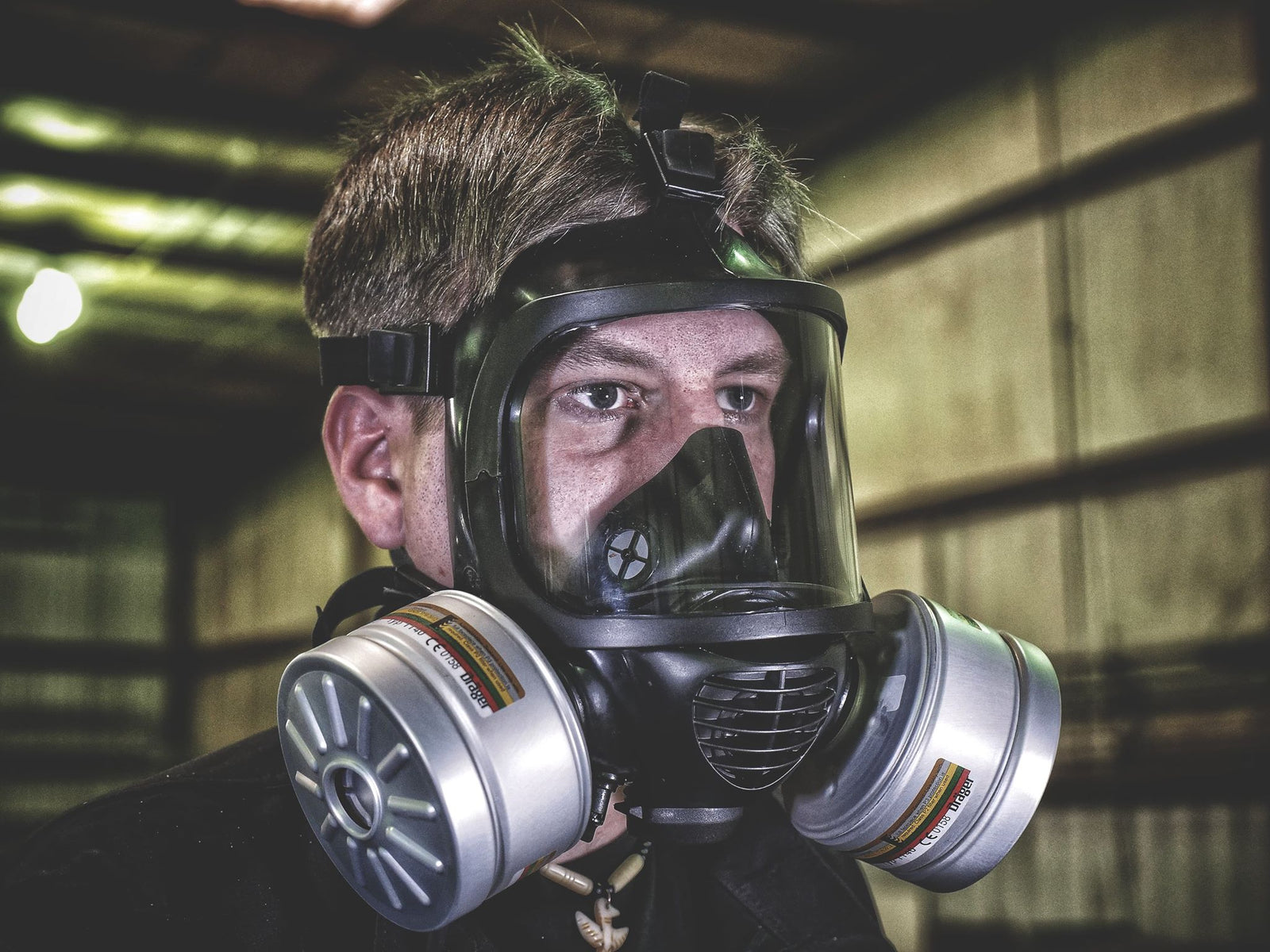
This guide covers what actually matters when your agency selects tactical respiratory protection: the mask, the filters, the training, and the procurement decisions behind all of it. No fluff. Let’s work.
II. Why Law Enforcement Needs Purpose-Built Gas Masks
Not every mask does the same job, and treating them like they're interchangeable is how departments end up exposed. Military masks are built for battlefield chemical agents and long, static wear in a defensive position. Civilian masks off the shelf are built for a guy spraying pesticide in his garage. Law enforcement masks need to be built for fast donning, full mobility, and working alongside the rest of an officer's gear, which is what the job actually demands.
A handful of scenarios define that demand:
Crowd and riot control. Officers deploying or standing near CS and OC agents need full vision and full range of motion. Nobody's standing still in a bunker for this one.
Barricaded suspects. Entry teams introducing chemical agents to force a subject out need a mask that holds its seal and its clarity through sustained, high-stress movement down a hallway or through a doorway.
Clandestine drug labs. Meth and fentanyl operations put chemical vapors in the air that can cause real respiratory damage within minutes. Standard-issue gear that hasn't been checked in years is not protection in that environment. It's a gamble.
HAZMAT co-response. Patrol and tactical units are showing up first more often on chemical calls, sometimes well before dedicated HAZMAT resources arrive. Waiting for the specialists isn't always an option when there's a life on the line right now.
Four different scenarios, four different demands on the mask. That's the whole case for purpose-built equipment over generic or surplus gear. A military or civilian mask will handle some of that list. A purpose-built law enforcement mask handles all of it. That is the whole argument.
III. What Are The Key Features to Look for in a Tactical Gas Mask?
Understand this before you read a single spec sheet: “tactical” is a paint job. A rating is a test report. Matte black and aggressive product photos protect nobody. Here is what does:
Filter compatibility. The 40mm NATO-standard thread is the most common on Earth, which means filter availability from many manufacturers for decades. A proprietary thread marries your agency to one supplier, and you will discover the downside on the worst possible day to go shopping.
Field of view. Old-pattern masks with two small eyepieces cut your peripheral vision roughly in half, and peripheral vision is how a cop reads a crowd, tracks a partner, and catches the guy reaching for his waistband. Modern panoramic visors solve this. For tactical units, verify the lens geometry works with your optics. A mask you cannot aim through is a mask that comes off at exactly the wrong moment.
Helmet and comms integration. The mask does not live alone. It has to be sealed under a riot helmet or a ballistic helmet, and your officers have to talk through it. That means a low-profile head harness, a speech diaphragm that makes verbal commands intelligible at distance, and compatibility with your radio setup. Test this with your actual gear before you sign a purchase order. Every agency runs a different kit, and the vendor’s demo video was not filmed wearing yours.
Ease of donning under stress. Here is what stress does, and pretending otherwise gets people hurt: fine motor control degrades, tunnel vision kicks in, and working memory shrinks to almost nothing. A mask that takes an officer 10-15 seconds in the locker room takes three minutes in a gas cloud at heart rate 150. Look for a quick-don harness design, a chin-cup that seats the same way every time, and strap geometry a gloved hand can manage. Seconds in the cloud are the whole game.
Durability and decontamination. Police equipment lives hard. The mask body should be butyl rubber or an equivalent that shrugs off chemical exposure and repeated decon washes. Beware manufacturers that pass off silicone as "NBC-rated", as law enforcement and first responders need a true unknown‑threat seal, which butyl provides because you never know what the hazard may be. The lens should be scratch‑resistant, because a scratched lens fogs your vision and your judgment with it. If the material degrades after a few decon cycles, you bought disposable equipment at non‑disposable prices.
IV. What Are The Types of Filters and What Do They Protect Against?
Filter selection is where a lot of departments get it wrong, usually because nobody laid out the differences clearly.
Riot control filters. Rated specifically against CS, CN, and OC. Lighter, cheaper, and perfectly adequate if the only threat your officers will ever face is their own gas. Read that sentence again and ask yourself if you believe it.
CBRN-rated filters. Broad-spectrum protection: chemical warfare agents, toxic industrial chemicals, biological particulate, radiological particulate. This is the filter for the call nobody dispatched correctly, the “odor investigation” that turns out to be a lab, the derailment, the white powder envelope. Quality CBRN filters in the NBC-77 SOF class carry shelf lives of up to twenty years sealed, which changes the budget math considerably.
Multi-threat versus single-threat. Here is the procurement reality: patrol does not get to pick its calls. A SWAT team deploying its own agent on a planned warrant can rationally run riot-specific cartridges. A patrol officer rolling up on an unknown cannot. The price difference between a riot filter and a full-spectrum filter is dinner for two. The capability difference is everything else on this page.
What no standard filter does. An air-purifying respirator filters the air that exists. It does not manufacture oxygen, and standard cartridges do not stop carbon monoxide. Structure fires and confined spaces are SCBA territory, full stop. Specialized filters in the VK-530 class add CO protection for escape scenarios, and they are worth a line in the budget, but nobody works a fire in an APR. Train that distinction until it is boring.
Lifespan and storage. Filters age out. Sealed and stored correctly, a quality CBRN cartridge is a decade-plus asset (MIRA Safety’s NBC-77 SOF, for example, is valid for 20 years). Opened, the clock starts. Log lot numbers and expiration dates the way you log equipment, store them out of heat and humidity, and treat surplus filters of unknown provenance as what they are: costume equipment. “Military grade” describes who bought it, not what decade it can still do the job.
V. Training and Maintenance Considerations
Equipment only performs as well as the training and maintenance program built around it, and this is the part most departments skip.
Fit testing. OSHA 29 CFR 1910.134 requires annual fit testing and medical evaluation for respirator use, and it is not a suggestion. A mask that doesn't seal is worthless no matter what the spec sheet says. Facial hair breaks a seal. Wrong sizing breaks a seal. So does a strap nobody adjusted correctly. Departments need a real fit testing protocol, run at minimum once a year, that checks the seal under actual conditions rather than a five-second glance in a mirror.
Cleaning and storage. Masks need decontamination after every deployment, following a written procedure, not whatever got passed down informally from one shift to the next. Storage needs to avoid extreme heat and cold. Straps and rubber need regular inspection for cracking and wear. Filter replacement runs on a defined schedule tied to manufacturer guidance and actual use, not on whenever someone remembers.
Donning drills. With practice, a trained officer masks up in under ten seconds. The department that drills quarterly does it on autopilot with the brain free for the real problem. The department that meets its buckles for the first time during the event does it slow, wrong, and exposed. Mask confidence drills, including exertion in the mask, belong on the training calendar next to firearms qualification.
Building a department-wide readiness program. A mask that's sat untouched since issue day gives a false sense of readiness. Officers need to train with their assigned mask under some kind of simulated stress, know exactly where their mask and spare filter live, and be able to don it correctly without fumbling. Scheduled, repeated drills are what close the gap between owning the gear and actually being ready to use it.
VI. How to Choose the Right Mask for Your Agency?
Selection should follow unit function and budget reality, not a single mask picked for the whole department because it's simpler on paper.
Match the mask to the unit. Patrol needs rugged, simple, and fast: a quick-don full-face mask with a broad-spectrum filter, because patrol meets the unknown first. SWAT adds requirements: optics compatibility, comms integration, hydration capability for long deployments. A HAZMAT co-response element should be looking at full CBRN systems with powered-air (PAPR) options for extended operations. One department, possibly two or three configurations, all on the same filter standard so logistics stay simple.
Budget honestly. A department can put a certified full-face CBRN mask and filter on an officer for less than the cost of one ballistic vest, and the vest analogy is the right one: this is life-safety equipment, budgeted the same way. The no-name import saves a few dollars a unit and costs you the certification, the parts pipeline, and the warranty. That is not savings. That is deferred liability with your name on the purchase order.
Think in decades, not units. Bulk pricing matters, but so does everything after the invoice: sizing runs for real faces, spare parts availability, filter resupply ten years out, and training support from the vendor. Ask for documentation packages up front, because many agencies fund PPE through DHS and state grant programs, and equipment with clean certification paperwork is equipment that qualifies.
Test before you commit. Get evaluation units. Put them on your biggest officer and your smallest, under your helmets, with your radios, through your drills. Any vendor confident in the product will hand you samples. Any vendor who will not has answered your question.
VII. The Bottom Line
Strip away the Marketing, and the decision comes down to a short list: a true CBRN certification instead of a style, a 40mm NATO thread instead of a proprietary trap, a lens your officers can actually work through, comms and helmet compatibility with your real kit, broad-spectrum filters for a job that does not announce its threats in advance, and a fit-testing and maintenance program that keeps all of it honest. The threats facing law enforcement changed. The standard did not: every officer goes home.
MIRA Safety builds CBRN-rated respiratory protection trusted by law enforcement agencies, tactical teams, and first responders worldwide. Explore the full law enforcement product line, or contact the team for department evaluation units, bulk pricing, and a formal quote. Your officers answer the call for everyone else. Equip them like it.
Frequently Asked Questions
What is the best gas mask for law enforcement?
What is the difference between a CBRN mask and a riot control mask?
How long do CBRN gas mask filters last?
How often does OSHA require respirator fit testing for police?
Can a gas mask protect against carbon monoxide or smoke in a fire?
About the author